
The Caption Formula That Actually Gets Instagram Comments
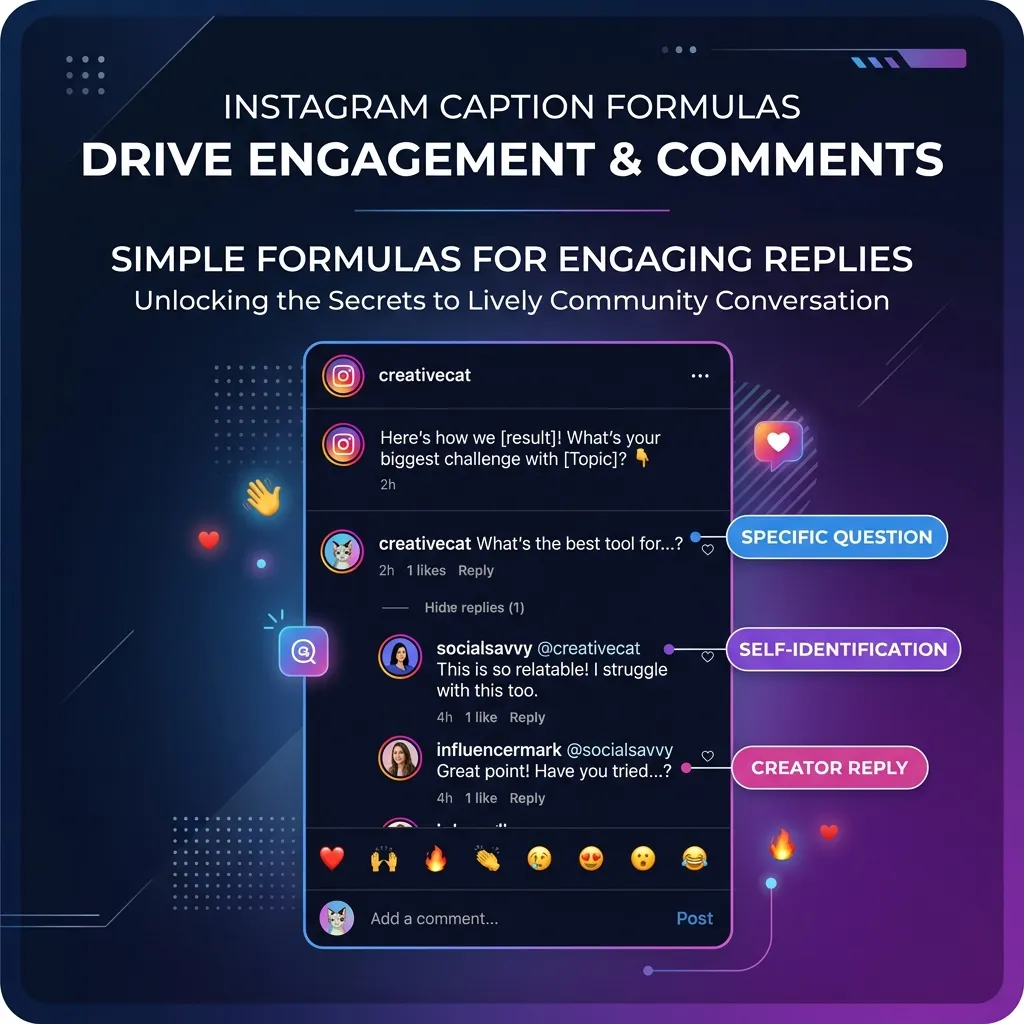
I used to write captions like essays. Long, detailed, well-structured. Paragraphs of genuine value. And nobody commented.
The posts would get saves. Sometimes shares. But the comment section? Crickets. Maybe a few fire emojis from friends. That was it.
So I studied creators who consistently get 200+ comments on posts with moderate followings — 15K to 50K followers. Not the mega-accounts where every post gets comments by default. The mid-size creators who were generating disproportionate discussion. And I noticed they all do something I wasn't doing.
They leave gaps for the audience to fill.
The Core Principle: Invitation Over Information
Here's the fundamental insight: great captions don't just deliver value. They start conversations. And conversations require space — a gap, a question, an opening where the reader feels invited to contribute their perspective.
An essay-style caption is complete. There's nothing left to add. The reader absorbs it, maybe saves it, and moves on. A comment-driving caption is deliberately incomplete. It creates a moment where the reader thinks: "I have something to say about this."
This isn't about being vague or withholding value. It's about structuring your caption so the value includes the audience's participation.
Six Caption Structures That Drive Comments
Structure 1: The "Which One Are You?" Close
"I'm definitely a Type B creator — plan everything, execute nothing. What about you?"
This works because people love self-identifying. It's low-effort (just name which type you are), low-risk (there's no wrong answer), and it makes the commenter feel part of a group. You can use this with any categorization: types, styles, habits, preferences.
Example: "There are two kinds of creators: the ones who batch everything on Sunday, and the ones who panic-create at 11 PM. I'm in recovery from being the second type. Which one are you?"
Structure 2: The Hot Take + Caveat
"Unpopular opinion: carousels are overrated. But here's the caveat — only if you're making them wrong."
This structure is brilliant because it gives people two directions to comment from. They can argue with the hot take ("I disagree, carousels work great for me because…") or they can engage with the caveat ("Wait, what counts as doing them wrong?"). Either way, they're commenting.
Example: "Hot take: posting daily is hurting most small creators. Caveat: it's not the frequency that's the problem — it's that daily posting usually means daily compromise on quality."
Structure 3: The Specific "I'm Curious" Question
Not "what do you think?" — that's too vague. Nobody knows how to respond to that. Instead, ask something specific that triggers a concrete memory or opinion.
"What's the one tool you couldn't create content without?" This question works because everyone has an answer, the answer is specific, and people love sharing their recommendations.
Example: "If you had to delete every app on your phone except 3, which 3 would survive? I'd keep Notes, Slidy Creator, and Instagram. What about you?"
Structure 4: The "Finish This Sentence" Prompt
"The worst advice I ever received about Instagram was ___."
Fill-in-the-blank captions work because they reduce the effort required to comment. The reader doesn't have to compose a thought from scratch — they just complete a sentence. This format consistently generates 3–5x more comments than open-ended questions.
Example: "Finish this: I'd grow so much faster if I just ___." (The responses always reveal exactly what your audience is struggling with — which is free market research for your next post.)
Structure 5: The Polarizing Statement
"I think most 'content calendars' are a waste of time." Full stop.
This isn't the same as a hot take with a caveat. This is deliberately leaving out the nuance — in the caption body. You add the nuance in the comments, responding to people who agree and disagree. The initial provocation drives the comments. Your thoughtful responses in the thread build trust.
Example: "I don't think you need a niche to grow on Instagram." (Then in the comments: "Here's what I mean — you don't need ONE niche. You need ONE transformation. Those are different things. What's your take?")
Structure 6: The Vulnerable Admission
"I've been creating content for 18 months and I still feel like an imposter 3 days out of 5."
Vulnerability drives comments because people relate. They've felt the same thing and never said it publicly. When you say it first, they feel safe to share their own experience. This creates some of the deepest comment threads because people aren't just responding to your content — they're sharing their own stories.
Example: "My most viral post got 50K views. My next post got 200. And I almost quit. Does this happen to everyone, or just me?" (Spoiler: it happens to everyone, and the comments will prove it.)
Caption Length: What the Data Actually Says
There's an ongoing debate about caption length. Here's what I've observed from tracking my own analytics:
Short captions (under 100 characters): Drive the highest comment-to-impression ratio IF paired with a strong visual (carousel or Reel). The brevity forces people to fill the gap themselves. Works best with polarizing statements and fill-in-the-blank prompts.
Medium captions (100–500 characters): The sweet spot for most posts. Enough space to set up the context and deliver a hook, but short enough that the CTA question doesn't get buried.
Long captions (500+ characters): Drive saves more than comments. If you're writing a long caption, put your question at the very top — not the bottom. Most people won't read 500 characters before commenting. They'll only see the first 2–3 lines before hitting "more." Your hook and question need to live there.
The First-Hour Strategy
The caption gets people to comment. But what you do in the first hour after posting determines whether those comments turn into a real thread.
Reply to every comment within 60 minutes. Not just "thanks!" or a heart emoji. Actually reply. Ask a follow-up question. Add a detail. Make the commenter feel like they said something worth responding to.
Why this matters algorithmically: Instagram counts your replies as additional comments. A post with 20 original comments and 20 replies from you has 40 total comments — and the algorithm treats it as a 40-comment post. Your engagement in your own comment section directly amplifies your reach.
Reply with questions. If someone says "This is so true!", don't reply "Thank you 🙏". Reply with: "Which part resonated most? I'm curious if it's the same for everyone." Now they reply again. The thread deepens. The algorithm rewards the extended conversation.
How to Handle Negative Comments
Not all comments are kind. Here's a simple framework:
Constructive criticism: Respond thoughtfully. Acknowledge their point. Add your perspective. These threads often become the most valuable conversations on your post.
Trolling or hostility: Don't respond. Don't delete. Hidden comments (the "restrict" feature) are your friend — the troll still sees their comment, but nobody else does. They don't get the reaction they want, and your post doesn't get the negativity.
Spam: Delete immediately. Spam comments signal low-quality engagement to the algorithm.
Your content is the start of the conversation. The comments are where community actually lives. Design your captions to invite participation, show up in the first hour to nurture the discussion, and watch what happens to your reach when the algorithm sees a post that's generating genuine conversation.